About this problem
Where it usually appears
What to look at
When to send photos
When the wall itself is damaged by damp
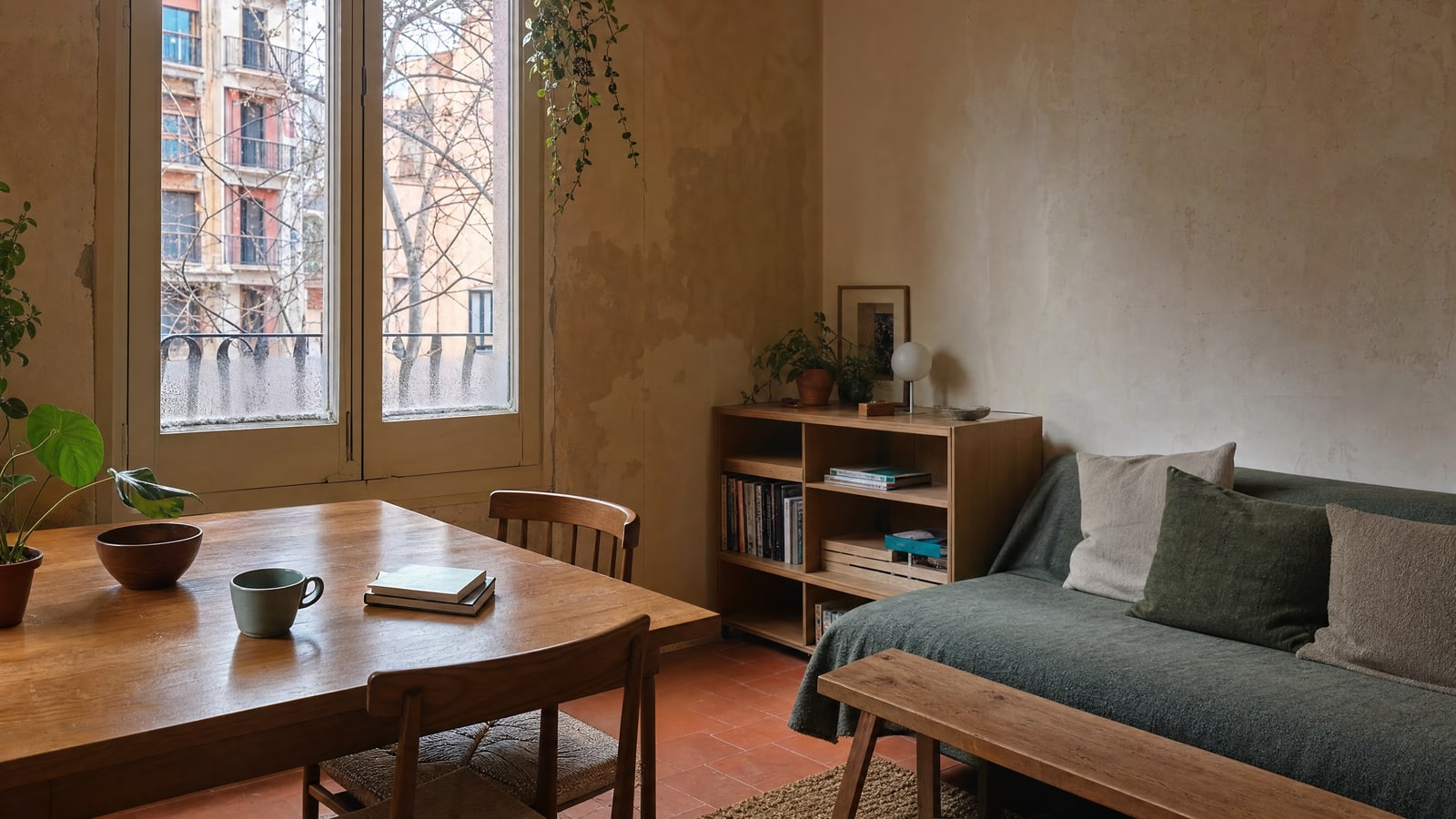
A damp wall doesn’t always announce itself as black mould. Often what you notice first is paint that’s swollen, patches peeling off, marks that keep coming back, or a wall that just looks tired and worn.
That’s why this page focuses on the visible problem and the state of the surface underneath. If the surface is already damaged, jumping straight to repainting is usually premature.
This is a problem page, not a service page. It’s here to help you read the signs and decide whether it’s worth moving on to damp wall repair or something else.
Signs to look out for
This page is probably the right one if you’re seeing:
- paint that’s bubbled or is coming away from the wall
- flaking patches or an uneven, rough texture
- stains that keep coming back
- a wall that generally looks worn or tired from past damp
- rings, colour changes, or areas that seem to be marking again
These matter because they’re about the wall itself, not just its colour. A wall can have no visible black mould and still not be ready to paint. If the finish is lifting, bubbling or changing texture, the sensible move is usually to check the base before thinking about a new coat.
If your case is mainly lifted or bubbling paint and that one symptom dominates everything else, this page still covers it — it looks at the wider picture of a wall damaged by damp, rather than a single narrow symptom.
Questions that help sort out the case
Before asking for any work, a few simple things help:
- is the wall actually damp to the touch, or does it just look damaged?
- is the problem low down, in a corner, or in one particular spot?
- is there visible mould as well as the damp?
- has it been painted before, and did the paint fail again?
These don’t replace an actual look at the wall, but they help avoid confusing a genuinely damaged wall with a wall that just needs a fresh coat of paint.
Stain versus damaged surface
A stain can just be a visible mark. A damaged surface means the wall has already lost adhesion — weak layers, flaking, paint that won’t hold. That difference changes what makes sense next: a stain might point towards watching it or treating it, while a damaged surface usually needs repair before paint.
So this page doesn’t stop at “there’s damp here.” It helps decide whether you’re still in a watching phase, whether there’s a surface to recover, or whether the right page is actually somewhere else — mould on walls, or condensation.
What usually makes sense
When the wall’s condition is the main issue, damp wall repair is usually the sensible next step. Once the surface is back in a stable condition, the finish can be considered — for example anti-mould painting. If condensation-related damp and mould are the bigger issue rather than a damaged finish, mould removal is the more direct entry point.
If the clearest sign is a dark or black mark on the wall, your case may fit better with mould on walls in Barcelona and the mould removal service.
If what you’re mainly noticing is condensation — steamed-up windows, marks near cold spots, patches behind furniture — it’s worth checking condensation mould before deciding what to do.
Why this page isn’t the same as mould on walls
Here the focus is the damaged wall and its finish. If visible mould is what worries you most, mould on walls in Barcelona is probably the better fit.
When this page fits better than repair
This page fits while you’re still reading the signs: stains, bubbling paint, flaking, cold patches, or a wall that looks worn. It helps sort the problem out before you ask for a specific job.
Damp wall repair fits better once it’s already clear the surface needs work: paint coming away, loose patches, poor adhesion, or a base that doesn’t look ready to paint. If you’re still not sure which stage you’re at, start here and send photos.
What photos can and can’t tell us
Photos can help show whether the wall has flaking, bubbling, rings, visible mould, or a finish that’s coming away. They also help show whether the affected spot is low down, in a corner, near a window, or on an outside wall.
What photos can’t settle is the exact cause of the damp, or a guarantee it won’t come back. The point of an initial read is to help decide whether to watch, repair, treat visible mould, or prepare a finish — without forcing a more certain answer than the information allows.
When photos aren’t enough
Some walls don’t give up their story from photos: paint that keeps bubbling in the same place after repair, a ring that grows whatever the season, damp on a wall nowhere near a bathroom or kitchen. At that point the question isn’t how to repair the surface but where the damage is coming from. Before repairing it again, a thermal imaging damp survey can help: the camera shows how temperature is spread across the surface and helps tell a cold spot in the building from a pattern consistent with damp, or from a pipe route a plumber should check. It doesn’t measure the moisture inside the wall, but it stops you repairing blind.
How a damp wall tends to progress
A wall affected by damp often tells its story in stages. First there might be a mark or a slight colour change. Later, paint may bubble, patches may peel, or the texture may start to change. If it progresses further, the finish stops being reliable and painting over it stops making sense.
Understanding that progression helps explain the case better. A wall that’s just shown a small first sign is different from one that’s had bubbling paint for months. A stable mark isn’t the same as one that’s spreading, opening up, or returning every time it’s painted.
This page is meant for that in-between moment when you’re still reading the signs. If the wall is already clearly asking for work on the surface, the next step is closer to the repair service.
Signs that point towards repair
A few signs make repair more sensible than painting straight over the problem:
- paint peeling off in flakes or layers
- bubbled areas that don’t feel firm to the touch
- a sandy, uneven or weakened texture
- wide rings that come back after painting
- areas where the previous finish has stopped holding
These aren’t a diagnosis of the underlying cause. They’re clues about the state of the surface. The practical decision comes down to whether the wall can take a finish, or whether it needs a more stable base first.
When damp and mould show up together
Sometimes a wall shows damp-related damage and visible mould at the same time. In that case it’s worth separating two questions: what to do about the mould that’s already visible, and what to do about the wall if the surface underneath is damaged.
If only the mould is treated but the wall stays badly damaged, the finish can end up weak. If only the wall is repaired without addressing visible mould, the result can also fall short. So the order depends on what the photos and the surface actually show.
That separation protects what each page is for: damp walls covers the damaged surface; mould on walls covers the visible mark; damp wall repair describes the actual work once the base needs attention.
What helps avoid a poor recommendation
To give a sensible steer, it helps to know whether the wall is on the ground floor, in a bathroom, bedroom, corner, exterior wall or near a window. It also helps to know whether there’s a smell, whether the area feels cold, whether it’s been painted before, and whether the problem changes with the seasons.
You don’t need a technical explanation. A simple description is usually enough: “it appeared two months ago”, “the paint is falling off”, “it’s behind a piece of furniture”, “we painted it and it came back”. That’s usually enough to point you in the right direction without turning a photo into a promise.
What to send on WhatsApp
Send a general photo of the wall, a close-up of the bubbling or flaking paint, and a line about when it first appeared. If there’s a low spot, a corner, a nearby window or an exterior wall involved, mention it — it helps make sense of what you’re showing us.